Blog
North Carolinians pay higher prices when tax cuts for corporations and the wealthy are made permanent
When tax cuts for millionaires and corporations are made permanent, everyday North Carolinians pay higher prices:
- Higher college tuition and fees
- This year, the UNC System increased undergrads' in-state tuition for the first time in nine years. The average increase is $125 per student. They also increased mandatory fees.
- Higher monthly healthcare premiums
- People covered by the State Health Plan are seeing premiums increase. Monthly premium increases for family coverage will range from $28.76 per month to $42.04 per month.
- Higher co-pays at the doctor’s office
- State lawmakers voted this year to create new copays for Medicaid at the maximum amount allowable by federal law.
- Higher fees for filing for divorce
- State lawmakers voted this year to increase the fee for filing for divorce by $50. This will result in people paying an additional $1.3 million in divorce filing fees each year.
- Higher court fees
- State lawmakers voted this year to increase general court fees by $30. This will result in people paying an additional $12.2 million in General Court of Justice fees each year.
- Higher transportation costs
- State lawmakers voted this year to increase ferry tolls and establish tolls on ferries that used to be free. The cost of an annual commuter pass will be $150.
- When school buses don’t arrive because of bus driver shortages, parents have to pay more for gas to get children to school on time.
- Higher food costs
- More than 110,000 fewer North Carolinians are receiving SNAP food assistance since H.R. 1 was enacted, leaving more families to cover rising food costs out of pocket.
- Hunger is on the rise: some food banks across the state are seeing up to 60% more visits.
- Higher child care costs
- The average cost of licensed child care is over $12,000 per year in NC, making it one of the biggest costs for working families with young kids. Only 15% of eligible children ages 5 and under are served by child care subsidies, based on federal eligibility guidelines. North Carolina could use state funding to expand child care subsidy and bring down costs for more families, but didn’t add any state funds to subsidy program in the last budget.
- Higher disaster recovery costs
- The most recent round of state disaster recovery funding for Hurricane Helene neglected several important needs, like forgivable loans for small businesses to help stabilize the economy, rental and utility assistance for disaster survivors, and sufficient funding for debris removal and private roads and bridges. When these needs aren’t addressed by governments, these costs fall on everyday North Carolinians.
- Higher housing costs
- NC has a projected shortage of over 300,000 rental units, and statewide the median rent has increased by an average of 20% since 2019 as state leaders have failed to invest enough in affordable housing to keep up with growing needs. Rent is now unaffordable for half of all renters.
- Fire department budgets are not keeping up with rising costs, and when communities can’t maintain adequate fire services, homeowners can face higher insurance premiums.
- Higher sales tax
- Over time, NC’s sales tax rate has increased while corporate and personal income tax rates have decreased. This tax swap has left working-class households carrying more of the responsibility for funding schools, health care, and infrastructure.
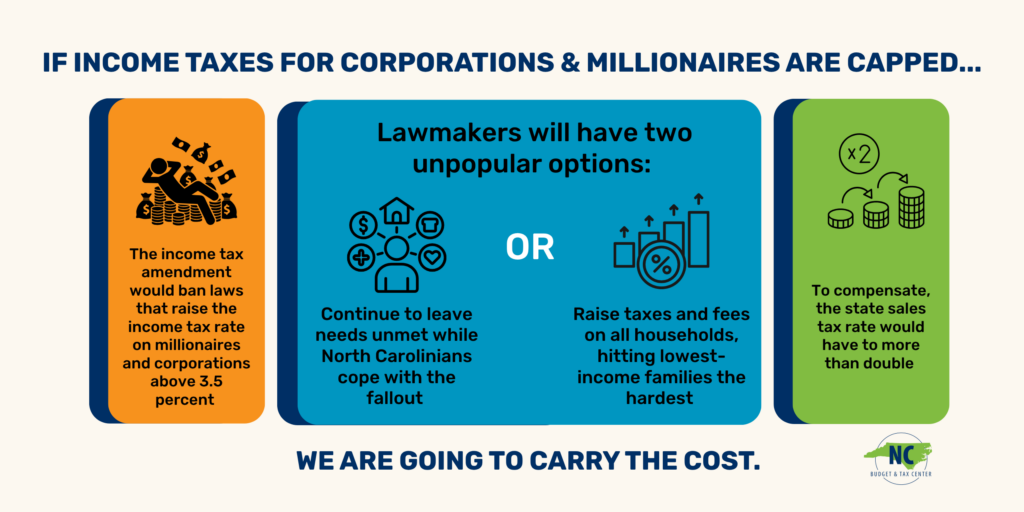
- A lower income tax cap risks an even higher sales tax rate: NC's state sales tax rate would have to more than double to compensate for the revenue lost to a lower income tax cap.
- Higher K-12 costs
- NC teachers spend more than $1,600 out-of-pocket for school supplies each year because state leaders have left our public schools the worst funded in the nation.
Students in some NC school districts face technology fees that can range from $15-$30 just to access critical learning tools.
- NC teachers spend more than $1,600 out-of-pocket for school supplies each year because state leaders have left our public schools the worst funded in the nation.
When tax cuts for millionaires and corporations are made permanent, everyday North Carolinians lose income:
- State employee and teacher pay
- Even after recent raises, public school teachers earn less than they did a decade ago, after accounting for inflation. More than half of teachers report working a second job just to make ends meet.
- Retiree pensions
- State leaders have not provided retired teachers and state employees with a permanent cost-of-living increase in nearly a decade, leaving their pensions unable to keep pace with rising costs.
- Local public employees like police, fire, and EMS
- The average fire responder, EMS worker, and police officer make less than a livable wage, despite often working irregular hours in jobs that can put their safety at risk.
- Miss out on federal and state tax credits that boost income
- 1 in 5 households who are eligible for the federal Earned Income Tax Credit don’t claim it, missing out on thousands of dollars on average that could back in their household budget. Adequate state funding for free tax preparation assistance could help close the gap.
- Most states have a state-level Earned Income Tax Credit or Child Tax Credit, and many have both, providing a boost to family income and well-being. North Carolina has neither.
- Miss work to deal with dysfunction, like no school bus or long lines at the DMV
- School bus shortages and failing HVAC systems disrupt students’ school days and leave working parents to fill in the gap, putting their work hours and paychecks at risk.