Research & Data
Types
Featured
Topics

Tax amendments put North Carolina’s infrastructure for business success at risk
North Carolinians’ skills, innovation, and labor are fueling our state’s economy. Investment in people’s well-being and community infrastructure sets the foundation for business success and continues to make North Carolina a place where businesses are relocating, starting up, or expanding their operations. But limits on how we fund key infrastructure for business success — public…
Statement on Gas Tax Gimmick from Alexandra Sirota, Executive Director of the NC Budget & Tax Center
We see the call for a one-day special session for what it is: a political gimmick, not a genuine commitment to making life more affordable for North Carolinians. Legislative leaders have had years to prevent costs from being shifted onto families and local communities and protect North Carolinians from the harmful policy choices of federal…
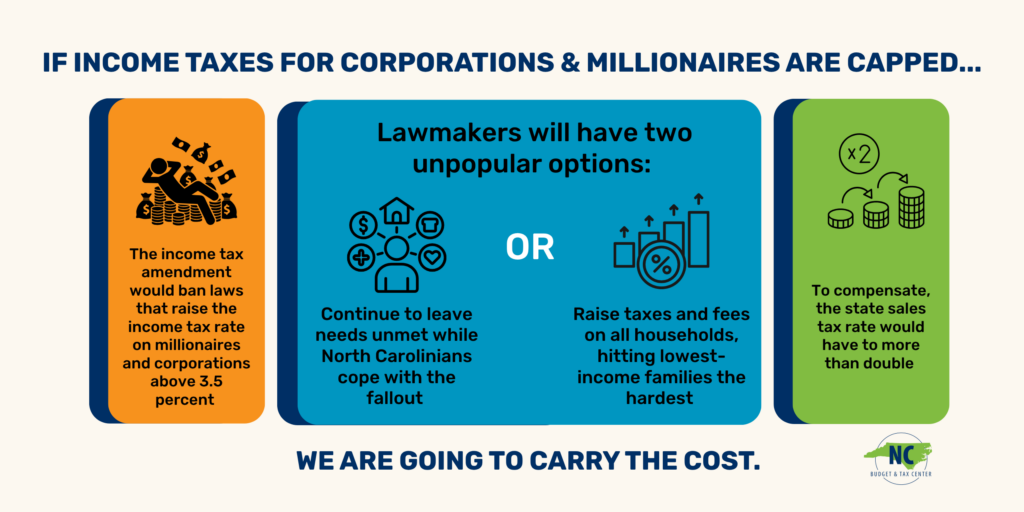
Capping income taxes for millionaires and corporations could lead to huge sales tax increase for working families
Taxes are how we come together to fund the things our families and communities want and need to live well: excellent public schools, affordable healthcare, accessible child care, effective disaster prevention and recovery, efficient transportation systems, safe environments, and more. North Carolina’s most important source of tax revenue — the state income tax — is…

NC could fund our public schools by taxing the rich and corporations
In a few weeks, North Carolinians will vote on a constitutional amendment to limit the income tax rate to 3.5 percent. This amendment would lock in tax breaks for wealthy people and corporations, and it would have lasting impacts on public schools, which rely heavily on funding from state income taxes. The amendment wouldn’t immediately…

Tax cuts, amendments, and disaster recovery: Helene after two years
Recovery efforts after a climate disaster can extend for years. Rebuilding homes and infrastructure so that disaster survivors can recover fully and with dignity requires significant tax dollars and a sustained, coordinated, collective effort. Yet what we have seen in North Carolina since Hurricane Helene in 2024 is a failure to invest resources at the…
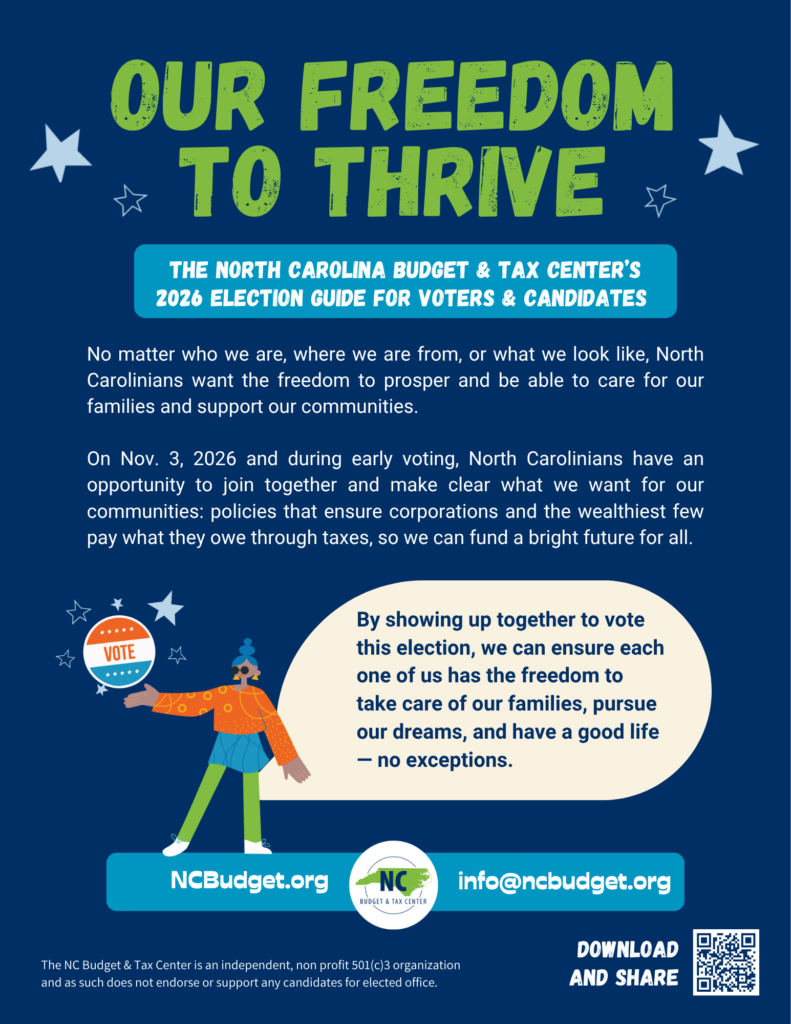
Our Freedom to Thrive: 2026 Election Guide
Download a PDF of the Election Guide
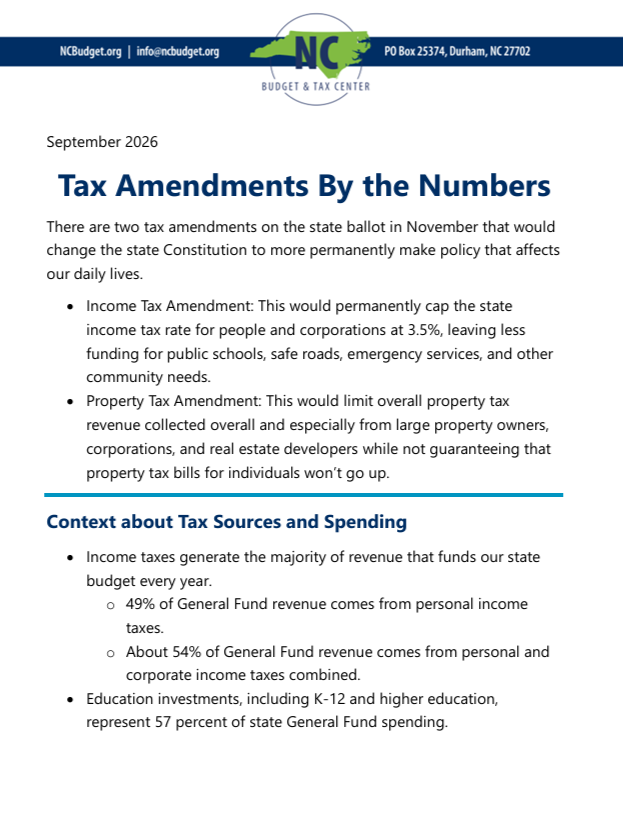
Tax Amendments By the Numbers
There are two tax amendments on the state ballot in November that would change the state Constitution to more permanently make policy that affects our daily lives. Income Tax Amendment: This would permanently cap the state income tax rate for people and corporations at 3.5%, leaving less funding for public schools, safe roads, emergency services,…

A property tax limit could cost our communities millions
Local governments across North Carolina — from the mountains to the coast — face growing costs from inflation, changing needs, lagging infrastructure, and state and federal policy decisions that have pushed costs to their communities. In November, voters will see a proposed change to the constitution on the ballot that could limit the ability of…
What $950 million could mean for emergency response
When someone calls 911, we expect emergency responders to show up. This is because local governments make sure our public dollars are put to use to pay and retain workers who keep our communities safe and provide the essential equipment they need to respond — from fire trucks to personal protective equipment. But firefighters, EMTs,…

State teacher raises fall short; Local governments left to fill the gaps
State leaders have been touting the average 8 percent pay raise they delivered for North Carolina public school teachers, but that headline obscures how the state budget fell short: teachers are still not paid what they deserve and local governments are left to cover millions of dollars in raises. What did the state budget actually…