
Statement on passage of Senate Bill 1080 from Alexandra Sirota, Executive Director of the NC Budget & Tax Center
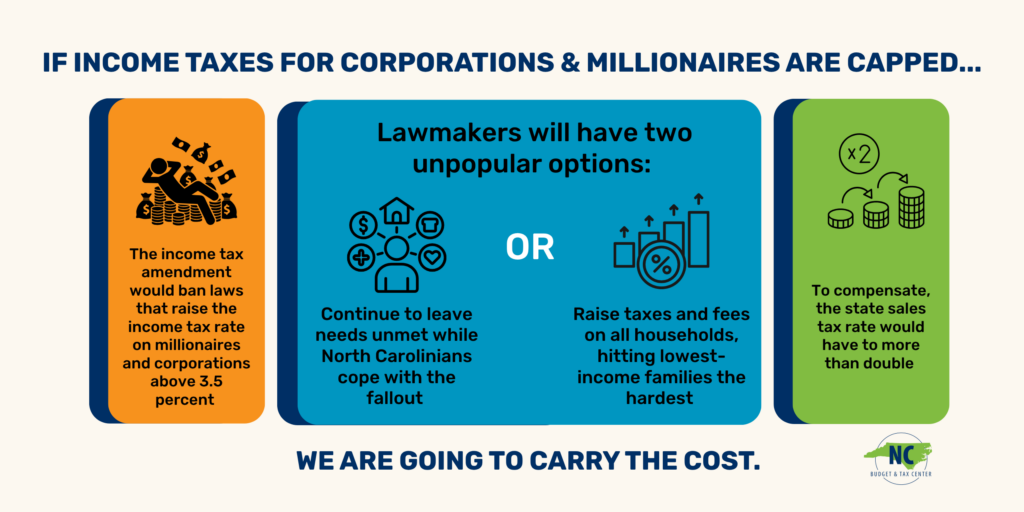
Senate leaders are moving quickly to ram through a bad budget deal for North Carolina, including an income tax cap that would constrain the primary source of revenue for the state’s General Fund and limit one of the taxes most aligned with people’s ability to pay.
In debate, Senate proponents play down the fiscal problems that this agenda will create, but North Carolinians know what more than a decade of tax cuts has meant in practice: underfunded public schools, child care closures, backlogs of infrastructure projects to bring clean water and broadband to communities, and no long-term planning for disaster recovery, resiliency, and the new costs from the federal government.
We trust voters to see through the gimmicks of this bad budget deal.
It’s hard to trust a legislative process that fails to grapple with the basic math problem facing our state — one created by the very leaders driving a process that obscures analysis and ignores the realities families and communities face every day.
Perhaps most disturbing, this proposal is part of a broader agenda that would continue delivering tax breaks to the wealthy few and profitable corporations, seek to lock those choices in permanently, limit working people’s ability to organize for quality jobs and pay, and restrict the ability of communities to shape the public services and investments they need.
Yet lawmakers still have not shown North Carolinians what a sustainable budget looks like under the constraints of a 3.49 percent income tax rate. They have not explained how essential services would be maintained, what tradeoffs would be required, or how the state will respond as costs continue to rise while policymakers deliberately narrow the tools available to meet them.
And while pursuing limits on local governments’ ability to raise revenue through property taxes, lawmakers have failed to explain how communities will continue funding public schools, emergency services, infrastructure, and other essentials that people rely on every day.