
Research & Data
Types
Featured
Topics
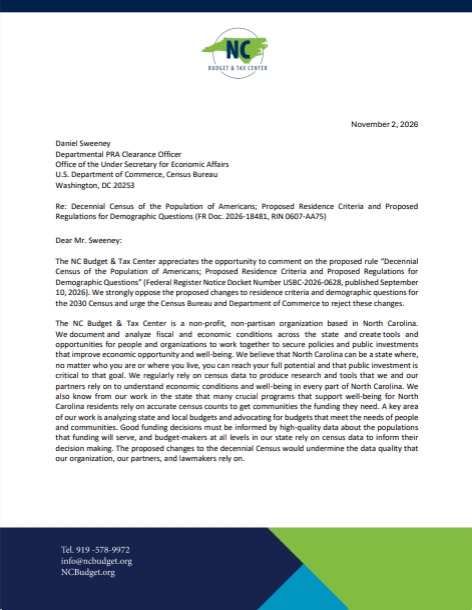
Public Comment on the proposed rule “Decennial Census of the Population of Americans; Proposed Residence Criteria and Proposed Regulations for Demographic Questions”
Dear Mr. Sweeney: The NC Budget & Tax Center appreciates the opportunity to comment on the proposed rule “Decennial Census of the Population of Americans; Proposed Residence Criteria and Proposed Regulations for Demographic Questions” (Federal Register Notice Docket Number USBC-2026-0628, published September 10, 2026). We strongly oppose the proposed changes to residence criteria and demographic…

New SNAP Error Rate Reveals Why North Carolina Cannot Afford to Limit Revenue
Starting October 2027, North Carolina could be responsible for paying $140 million in SNAP benefit costs, according to newly released U.S. Department of Agriculture data. Nearly 1.3 million North Carolinians will be counting on the state to fully cover those costs so they can continue putting food on the table. The need for food assistance will not simply disappear because North Carolina cannot afford to sustain it. If state…
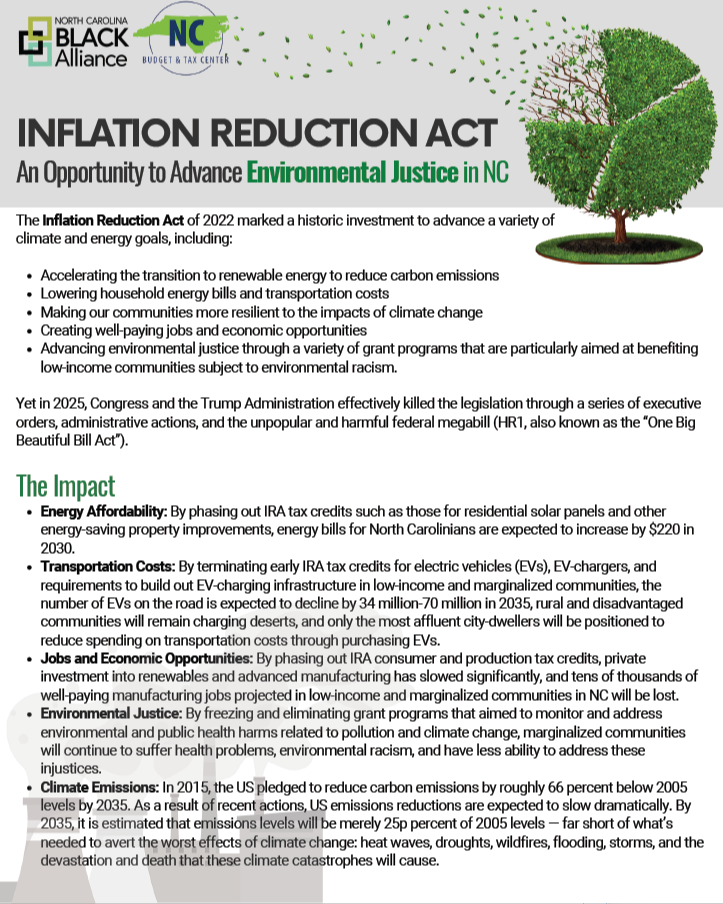
Inflation Reduction Act: A Lost Opportunity to Advance Environmental Justice in NC
No matter what we look like or where we come from, we all need the freedom to drink clean water, breathe safe air, and live in healthy communities. To that end, the Inflation Reduction Act (IRA) of 2022 marked a historic investment to advance a variety of climate and energy goals, including: Accelerating the transition…

Investing in our colleges is investing in North Carolinians
All people deserve the opportunity to thrive. This means having the chance to develop one’s talents and skills and find meaningful and fulfilling work that pays a living wage. To make this a reality, we need well-funded systems in place that allow everyone, regardless of their gender, race, or class, the opportunity to improve their…

Mapping What’s at Stake: The Impact of SNAP on North Carolina’s Families and Local Economies
Every county in North Carolina benefits from federal food assistance. Each month, SNAP (aka food stamps) dollars flow into every community, helping families put food on the table and keep up with rising costs. They also keep local grocery stores open, support jobs, and strengthen local economies. That critical support is now at risk. Without…


Latest news on what’s going on with federal funding
Subscribe for text updates Updated 3 pm, Jan. 30, 2026 The federal funding deadline is today. Congress is again considering short-term spending plans that fail to address the real economic pressures facing families and states. Instead of prioritizing affordability and essential public supports, Congressional leaders are moving toward increased funding for the Department of Homeland…

From paychecks to rising costs: The real impact of a federal shutdown in NC
When the federal government shuts down, even partially or temporarily, there are a number of ways in which our daily lives can be impacted — from whether federal offices and national parks remain open to whether landlords get rent or families can put food on the table. Over time, those impacts tend to get worse…
No more tax cuts: Western North Carolinians deserve a budget that prioritizes people
It’s been one year since Hurricane Helene first hit Western North Carolina on Sept. 27, 2024. With so many recovery needs still yet to be addressed and so little help from the federal government, it’s time for the state legislature to pass a budget that prioritizes people and stops cutting taxes. Helene caused an immense…
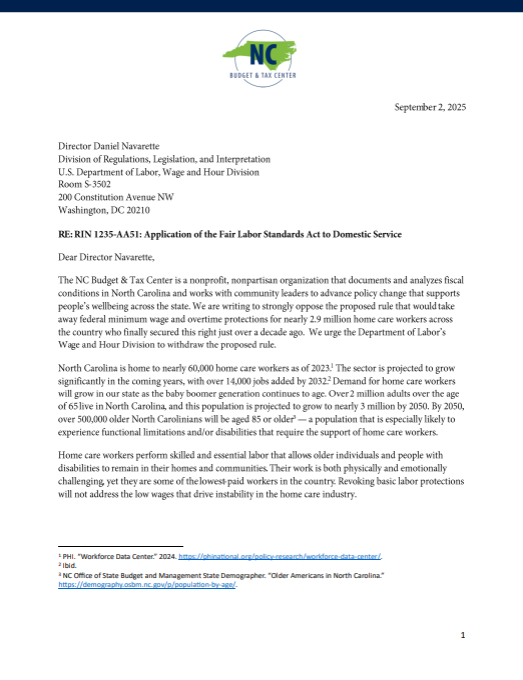
Public Comment: DOL Rollback of 2013 FLSA Rule Change
The NC Budget & Tax Center believes that all workers deserve dignity, respect, and to be paid a living wage for their work. Historically, domestic workers were excluded from most legal workplace protections in the Federal Labor Standards Act (FLSA), a federal law first passed in 1938. The FLSA required employers to pay most workers…