Tax cuts hurt public schools in North Carolina
As North Carolina’s public school students, teachers, administrators, and staff return to the classroom for another school year, tax cuts that have benefited the wealthy few and profitable corporations are shaping their experience and limiting their educational opportunities.
It doesn’t have to be this way.
North Carolina has the wealth to fund public education so that we reach the national average in teacher pay and per-pupil spending.
If North Carolina raised the income tax rate on corporate profits to 5 percent to be more aligned with our neighboring states, we would have $2 billion more to fund every child’s future — enough to pay our teachers at the national average and make sure the state isn’t pushing more costs onto local governments. Currently, local governments across North Carolina are funding more than 6,200 teaching positions because of the state’s failure to commit state funds to every child’s education.

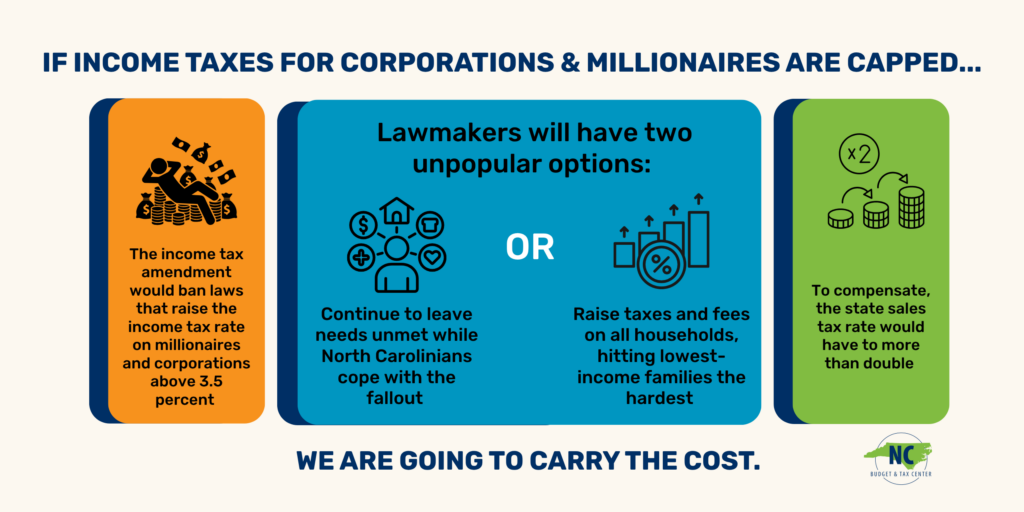
On the ballot this November, a change to the state constitution would cap the income tax rate at 3.5 percent, permanently locking in the income tax cuts of the past decade and blocking our state from setting higher tax rates on profitable corporations and wealthy individuals.
Cuts to the corporate income tax have sent more than 9 out of every 10 dollars to out-of-state residents, while cuts to the personal income tax have sent 2 out of every 3 dollars to the richest 20 percent of North Carolinians. Meanwhile, children in classrooms across North Carolina are being shortchanged by state legislators who have put tax cuts first ahead of classroom supplies and textbooks, school personnel and facilities.
A lower cap on the income tax would make it harder for North Carolina to catch up. It would conservatively block $17 billion in capacity that could fund better learning environments, supports, and opportunities for children across the state.

The state income tax is the major source of revenue enabling our collective investments in the priorities people have for good schools, care for our neighbors, and connecting every community — no matter if it’s a holler in Pisgah Forest or a hamlet on Pamlico Sound.
A limit on income tax policy options available to future policymakers also puts a limit on our children’s future by blocking investments in the conditions that shape learning, family earnings, and the opportunity to live well in every community of our state.