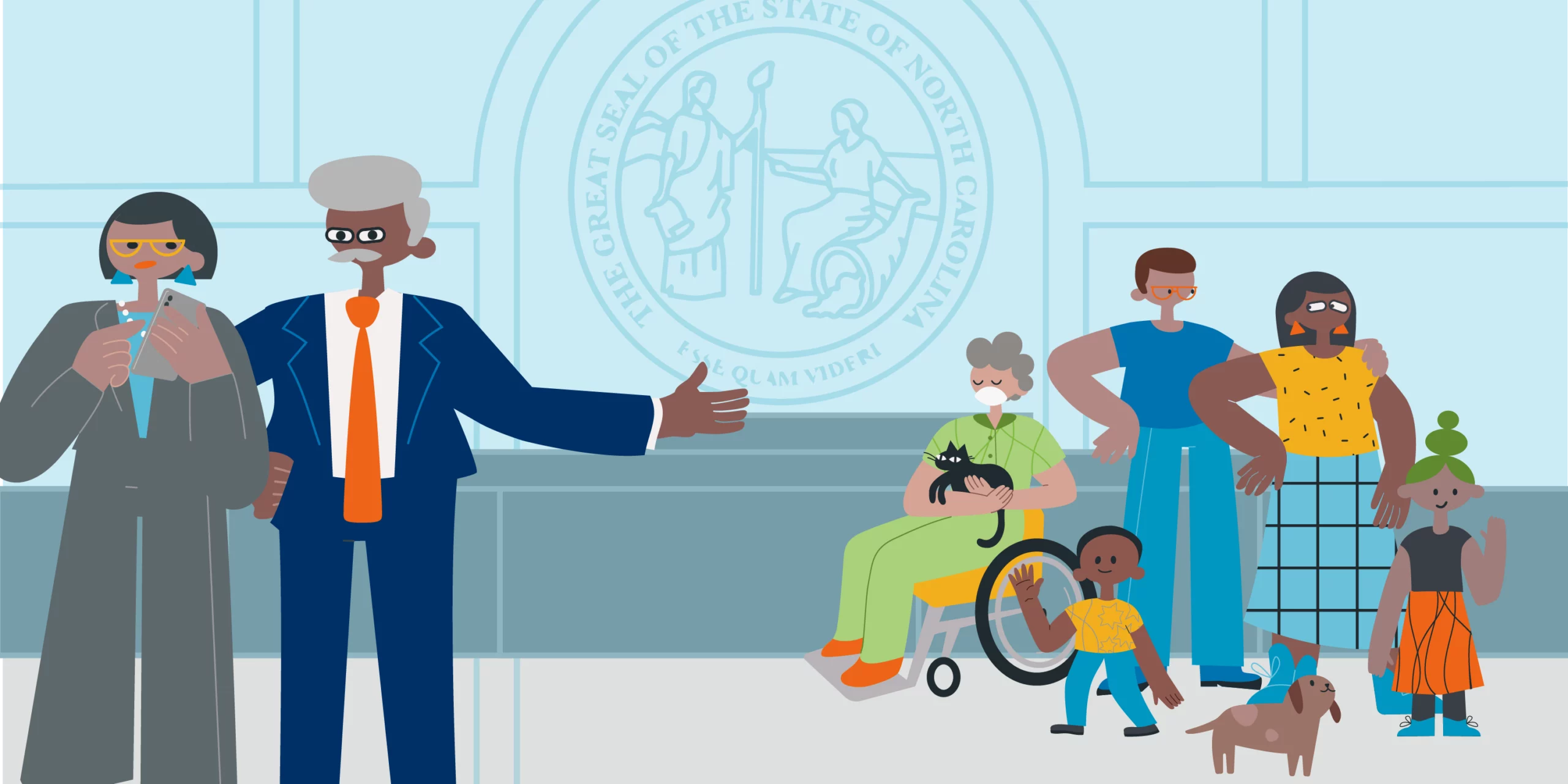
It’s time for a Well-Being Budget in North Carolina
What if progress and prosperity in our state was not defined by measures like the GDP or stock market, but by indicators that measure the level of well-being for all North Carolinians?
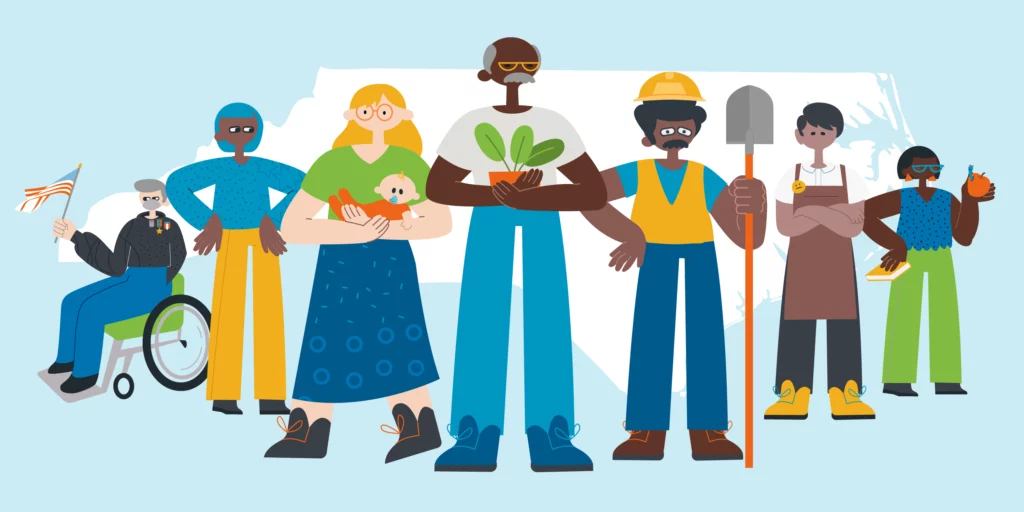
North Carolina’s workers power our economy — they grow and harvest our food, care for and educate our children, and research and develop new medicines and technologies that improve our lives. Building an North Carolina economy that works for us all requires policies that support people who fuel the economy, and when all North Carolinians have what they need, it strengthens our state’s economic well-being, too.
But costs for essentials like housing, child care, and food have risen faster than wages for too many workers in our state. Federal cuts to programs people rely on — like SNAP, Medicaid, and health-care tax credits that help nearly a million North Carolinians afford health care — are making daily life even harder for families and workers alike.
Unfortunately, while North Carolina workers and families struggle with the costs of essentials, powerful lawmakers in Raleigh have focused their attention on economic indicator‘s focused on growth and competitiveness, and prioritized policies like tax cuts for corporations and the wealthiest at the expense of the rest of us. Those policy decisions have significantly reduced state revenue and constrained our ability to invest in programs that improve well-being and make life more affordable — like public education, child care, housing, health care, and infrastructure– — the building blocks of an economy that works for us all.
This is not inevitable — lawmakers can change course.
As the 2026 legislative session begins, we call on our state lawmakers to prioritize economic well-being for all of us through a Well-Being Budget for North Carolina. A Well-Being Budget raises revenue equitably by asking the wealthy and corporations to pay what they owe, and invests in our workers, families, and communities — ensuring everyone has access to the basics like safety, health care, food, and housing — while also investing adequately in programs that promote opportunity, like great public education and quality workforce development programs that connect workers with good jobs so higher needs like dignity, purpose, social connection and life satisfaction are attainable for all.
NC General Assembly members have the power to make policy decisions that enable well-being for all, but doing so requires bold leadership. Here are our suggestions:
Stop automatic tax income tax cuts: Changes NCGA leadership has made to our state tax code since 2013, including ongoing automatic income tax rate reductions, have resulted in a loss of $18 billion dollars in public dollars annually; that’s around half of our entire general fund. If lawmakers do not stop these automatic income tax cuts, we will lose billions more in annual revenue once these cuts are fully phased in. Nonpartisan fiscal analysts and state budget economists warn this tax cutting is leading us toward a fiscal crisis that will leave us unable to continue investments even at current low levels, much less invest adequately as our population and needs grow.
Good budget process: Our state budget is the most consequential single piece of legislation that comes out of our General Assembly. It affects the lives of every single resident of our state, yet only a powerful few have a hand in crafting it. We are demanding an open, transparent, decelerated process with time carved out specifically for public input and time for meaningful review and debate by all lawmakers, not just a select few in leadership positions.
Focus budget allocations on programs that will improve life and increase affordability: North Carolinians want improved quality of life, not more tax cuts for the wealthy and corporations. NC lawmakers need to pass a budget that addresses the affordability challenges facing North Carolinians in child care, housing, health care, energy costs, and food access by stopping future tax cuts scheduled for corporations and the wealthy. Our state budget investments should build the foundation for the quality public schools, affordable housing and health care, and good-paying jobs that ensure all of our families can thrive and access well-being.
Raise revenue: Due to the depth of revenue loss as a result of tax cuts over the past several years, lawmakers will need to proactively raise revenue to fund services at levels sufficient to promote well-being and prosperity. Returning to a graduated income tax rate structure that includes a higher rate on very high incomes, and raising our corporate income tax to 5 percent– — a level on par with our neighboring states — will put North Carolina on more solid footing and allow meaningful investments in currently underfunded but crucial programming.
Protect SNAP and Medicaid: HR1, the harmful federal megabill shifted costs for basic needs services to states that had always been covered by federal funding. These shifts create billions in costs over the next ten years that North Carolina will be required to pay to ensure healthcare and food assistance continues to be available for North Carolinians. Doing so will not only protect the well-being of families bu t th e well-being of communities — retailers and farmers will be able to continue to provide and produce the food people need, and health care providers will stay open and able to serve people across the state to manage chronic conditions and get the care they need when they need it.
The people of North Carolina fuel our economy. Policy decisions this session should reflect that reality, and address the affordability crisis.